

On Sept. 8, the U.S. Supreme Court (SCOTUS) overturned U.S. District Judge Maame E. Frimpong’s order prohibiting U.S Immigration and Customs Enforcement (ICE) agents in Los Angeles from initiating immigration detentions on the basis of individual demographic information.
SCOTUS’s decision allows ICE agents to consider an individual’s apparent race or ethnicity, use of Spanish or accented English and presence at certain workplace locations, like farms and construction sites, as probable cause in immigration status detentions.
This ruling is not the final word, but it will allow agents to initiate these stops while the case continues to play out. Professor Morgan Hazelton, a co-chair of the political science department, said there was a distinction to be made between SCOTUS blocking a lower courts order and hearing the actual case itself.
“I would note that the standards applied to considering if a temporary restraining order should be overturned are different from would be applied to a fully briefed and argued case regarding the application of the Fourth Amendment,” Hazelton said. “ These emergency rulings aren’t substitutes for decisions by the Supreme Court on the heart of the case, but they increasingly are used to instruct lower courts.”
The Fourth Amendment protects individuals from being unreasonably stopped and detained without legal basis or a warrant signed by a judge. SCOTUS’s decision in this case has left many people worried about their Fourth Amendment rights. Hazelton said our founding fathers had the same fears.
“Generally, the constitutional risks of allowing very broad criteria to count as reasonable suspicion are that you fail to protect citizens and other individuals in the country from stops motivated by broader identities rather than individual behavior,” Hazelton said. “The framers were very concerned with government overreach and tyrannical use of law enforcement. You run into issues of the right to be secure from unreasonable searches and equal protection of law.”
The Republican majority on the Supreme Court overturned the order in a 5-4 decision without providing much reasoning for their action. Despite this, Associate Justice Sonia Sotomayor responded with a dissenting opinion. Hazelton said that the way in which the majority reached their decision made it such they did not have to write a full opinion.
“The majority framed this decision in terms of judicial restraint – that judges should not impose their views of what is the proper policy but rather what is allowed under the Constitution,” Hazelton said. “It is a way of saying they believe the searches are allowed under the Constitution, though the dissenters pushed against this.”
Many students are also worried about what this could mean for the future. Alix Gunter, a sophomore majoring in international studies, said that the decision will hinder ongoing efforts towards racial unity and civil rights.
“I think that the recent SCOTUS ruling is incredibly unconstitutional and is only going to add more fuel to the fire of racism and unfair deportation within our country,” Gunter said. “With the current federal administration that we’re under, I fear that there’s not much hope for progress against racism and our fight for liberty.”
Triston Ivory, a sophomore studying psychology, said that he believes this decision and the way the current administration has been handling immigration policy is “horrible.”
“Law enforcement being able to essentially stop & search people who ‘look Latino’ or speak Spanish allows them to possibly judge their detaining process based on racial bias,” Ivory said. “It also feels like politicians on both sides of the aisle do not care enough about their constituents’ rights being infringed upon.”
Rina Antoun, a junior studying environmental sciences, said that they were worried about how the current administration’s handling of immigration issues may affect their family.
“I feel very nervous about the state of the country at the moment. It fills me with so much anxiety that me and my family are next,” Antoun said. “I think it’s a scary direction because being able to racially profile people as immigrants or not is extremely dangerous to due process. No one should be considered illegal.”
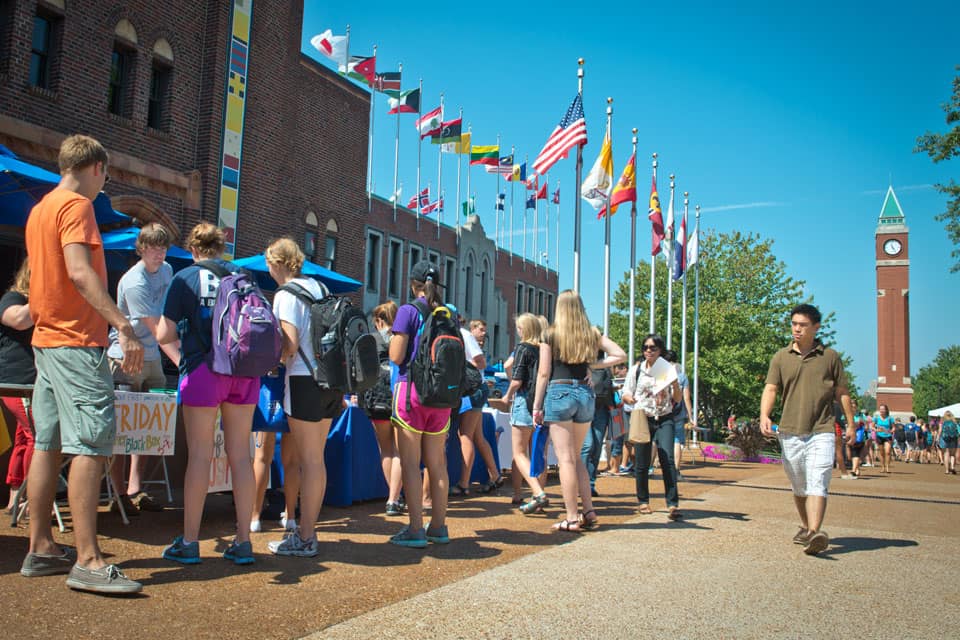
This decision is particularly concerning for SLU’s international students because it puts them at a higher risk. SLU has international students from over 100 countries and it is necessary for SLU to prioritize their needs and worries about these heavy decisions.
Luchen Li, Associate Vice President for Global Engagement & International Enrollment, could not give a full comment on the ruling but did say that SLU is dedicated to protecting the safety and well being of international students.
“The Office of International Services and the Department of Public Safety regularly provide guidance and resources on campus safety, including at international orientations and other outreach efforts, to ensure that all students feel safe, supported, and cared for,” Li said.