
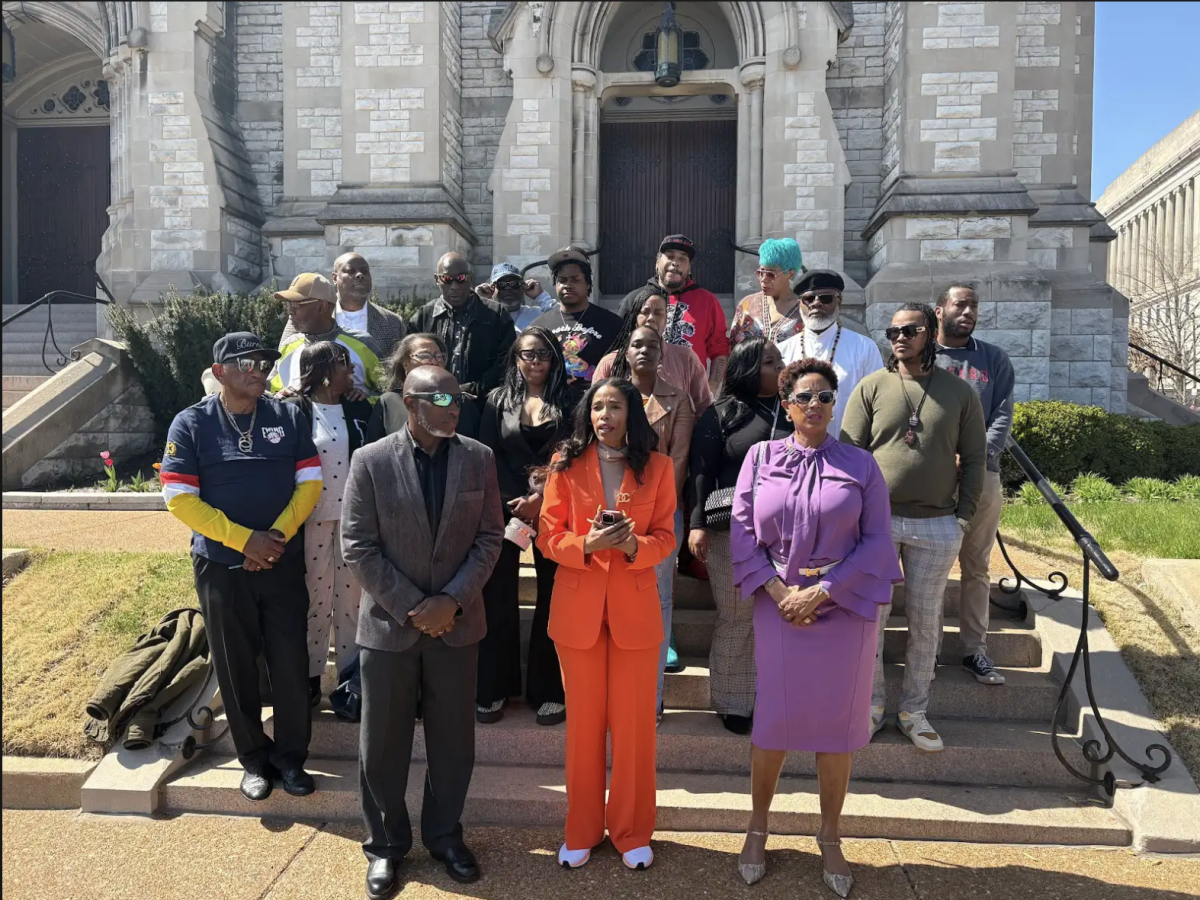
The Descendents of the St. Louis University Enslaved called upon the university in a recent petition to carry out promised commitments and “reengage in good faith” with the descendents.
The petition came about after a DSLUE liaison allegedly recanted certain promises previously made on behalf of the university, which included a memorial and other initiatives to formally recognize the enslaved individuals. DSLUE also alleges a lack of transparency on behalf of the university, which has caused the reconciliation process to extend over seven years.
Robin Proudie, a decorated U.S. Navy veteran, SLU junior in the School for Professional Studies and the founder and executive director of DSLUE, said these acts of acknowledgement and respect for individuals who were enslaved by the university are important.
“Our ancestors belong outside of the darkness and [to be] brought into the light,” Proudie said.
Between 1823 and 1865, Saint Louis University and other surrounding Jesuit-affiliated institutions trafficked and enslaved over 200 individuals, according to research conducted by the Slavery, History, Memory and Reconciliation project in 20219.
Previously, DSLUE had collaborated with a designated board of university administration over several meetings to create a 10-point plan of acknowledgement and reconciliation. This plan included a specific framework for a formal apology, the establishment of a permanent monument on campus and some form of economic reparations for the descendants of the enslaved.
Last March, DSLUE withdrew their participation in the university’s scheduled public apology after certain details of the event were changed last minute without DSLUE’s knowledge, according to Proudie.
In response, the university agreed to “continue the work of building relationships with descendants” according to a university-wide email from former president Fred Postello.
President P0stello personally donated a statue, but Proudie was assured by SLU’s administration that “this statue [was] not the university’s commitment to establishing a permanent monument memorial on the campus” and that the university would further the work of reparations with the descendants over the summer of 2025.
Proudie then said that the summer “came and went” without sufficient continuation of reparation efforts, even though President Postello “affirmed that this is what [the university is] going to do” before leaving.
Now, DSLUE demands that “healing, belonging, and economic repair” must become a strategic priority for the upcoming year, according to their petition.
SLU student Zack Diebold, a senior in the School of Science and Engineering, said that he signed DSLUE’s petition as there had become “a clear disconnect between SLU’s rhetoric and its actions, which has become impossible to ignore.”
“When we choose to attend SLU and invest our tuition here, we are buying into the Oath of Inclusion and the mission to be ‘men and women for others.’ It is disheartening when the university fails to lead by example,” Diebold said.
“They pulled themselves up by my ancestors’ boot straps,” Proudie said, referring to the university’s foundation built from forced labor and abuse.
Now, with the commemorative monument seemingly off the table, Proudie, her family, and the rest of the descendants are even more deeply hurt by the university’s actions.
“What is that saying?” Proudie asks. “What does that say to us?”