

Students ask their peers to embody everything from possessed actors to unfazed arson victims in performances of “Immediate Theatre” in Xavier Hall from Nov. 13-16.
Auditions for the show took place in tandem with those for Macbeth, but the process started long before then. A show of this type is a first for SLU. Each director is a student in professor Lucy Cashion’s advanced directing class, and their shows are the culmination of their coursework. Cashion aims to keep these projects as part of the main theatrical cycle.
Cashion said that she works as an artistic director, ensuring that the show happens from a logistical standpoint and offering advice when needed.
“I really do love mentoring early-career artists,” she said. “I really enjoy watching them discover things [and] the dialectical nature of the mentorship.”
The shows are split between two nights. Attendees can see four plays one night, then come back the next night and see another three.
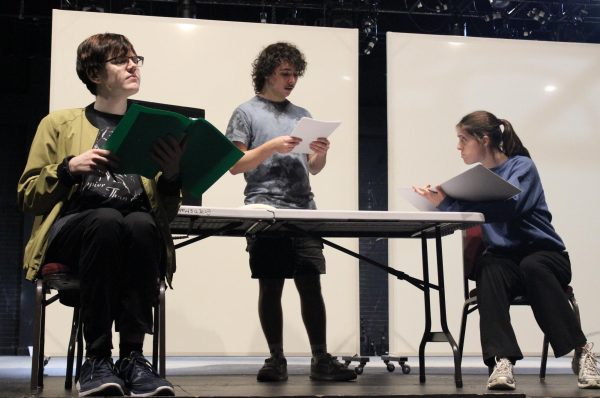
Each play has a wildly different plot, tone and setting. “Antigone” by Sophocles and “The Trojan Women” by Euripides are both modern adaptations of ancient tragedies. “1969 Terminal 1996” by Susan Yankowitz and “Rough for Theatre II” by Samuel Beckett both deal with heavy themes of life and death; and “How Much is Your Iron?” by Bertolt Brecht, “The Proposal” by Anton Chekhov and “The Still Alarm” by Joseph Arthur all implement satire and slapstick elements.
The directors’ motives for picking the shows were similarly varied. “Antigone” in Wellman’s adaptation focuses on the Three Fates’ creation of Antigone in a “first draft” approach. Lottie Wheeler chose the play for its lyrical language, opportunities for directorial growth and for its subject matter of burial rites and respect for the dead, a passion of Wheeler’s.
“How Much is Your Iron?” had a more political motive for director Bryce James. The play highlights Sweden’s involvement in World War II, with each character representing a different country.
“It’s really interesting to look at what happened 90 years ago and use it as an allegory for what’s happening today,” said James. “I want [the audience] to walk away thinking, ‘Isn’t it stupid how Sweden was just so willfully ignorant of what was happening?’ and question if maybe they’re being willfully ignorant as well.”
Despite their contrasting approaches, both directors agreed that theater is a powerful, vibrant and essential art form that more people should enjoy. For Wheeler, that power lies in its immediacy: “Seeing people living, breathing and telling a story within the same room,” she said. “It just makes you kind of recontextualize that story as more, like, real and raw.”
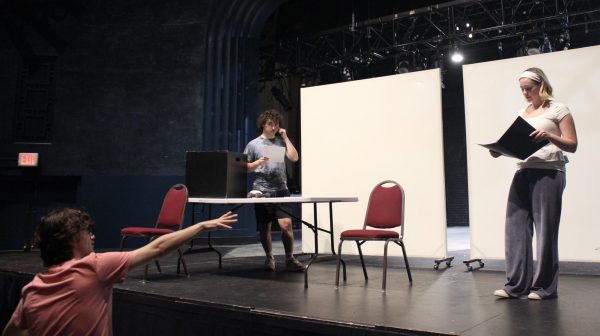
James echoed the sentiment, adding that, “You go to the theater to immerse yourself in a world that is not your own but still so familiar.”
Actors enjoy the experimentation and fresh energy that the student directors bring.
“It’s their first chance to make really creative decisions,” said freshman political science major Anna Soeder. “It’s kind of like throwing everything at the wall.”
Theater major students also benefit from the new style. “It’s also great … being able to work with different directors and getting that experience, because if you want to do this for a living, it’s something you have to get used to. Not everyone will be the same,” Damian Sapp said. He and others have enjoyed getting into different characters with historical lessons and character portraits.
“Immediate Theatre” offers something for every performer, director and audience member. Performances will be on Nov. 13-15 at 7 p.m. and Nov. 16 at 1 p.m. Student tickets are available for $10 at MetroTix.