

Clad in costumes and ready for a scare, over 100 Saint Louis University (SLU) students and staff gathered for the Rainbow Alliance’s fourth annual Halloween-themed drag show in the Wool Ballrooms of the Busch Student Center on Oct. 2, 2025.
This popular SLU tradition featured six local artists: Dory MiFaSo, Vanessa Frost, Roxie Valentine, Noah Mazzeratie Steele, Sara Shay and the show’s host, Roxxy Malone.
SLU Vogue also had a feature runway showcase, and there was a lip-sync competition between volunteer students from the audience.
The event was free to attend, but donations and tips went to the Queer Closet, an on-campus initiative aimed at providing LGBTQ+ students with free gender-affirming clothes and accessories. The closet is fully run by student volunteers, and open hours are posted on their Instagram. Anyone is welcome to stop by, pick out free clothes and learn about getting involved.
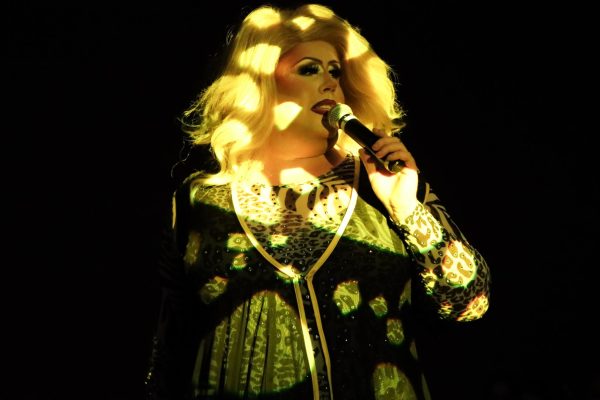
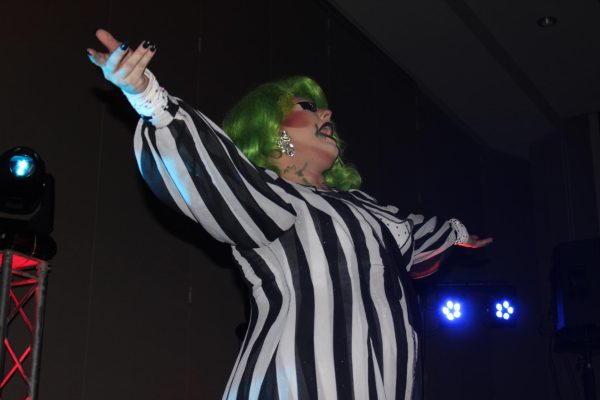
Performances included everything from a bedazzled Freddy Krueger singing punk pop, to a witch crooning the blues, to Squidward attempting “Rush E” on the clarinet, showcasing the tradition of drag being wildly unique and creative.
Rainbow Alliance’s president, Beautiii Smith, expressed that these drag shows are important for SLU students to feel welcomed and included, especially at a time of increasing fear and tension within the LGBTQ+ community as national policies and attitudes threaten their security.
“It’s a very troubling time to be queer, or any minority to be exact, and I think that having this drag show now is more important than ever,” Smith said. “I think a lot of times it shocks students, it even shocked me, when I came here and there was a drag show … There is a place for students here, whether that be with Rainbow or just at SLU in general.”
Despite these challenges, drag exists as a form of resistance. In the past, groups of protesters gathered at Grand Boulevard and Laclede Avenue to oppose the performance; this year, none appeared. Valentine said that most protesters misunderstand what drag is.
“I don’t think that most of the people that protest drag have ever really watched drag,” Valentine said. “Drag is literally just dress up. I’m doing the same thing I did whenever I was in preschool playing in the dress up bin, except now it’s on a stage lip-synching to music.”
Drag has been a staple celebration of creativity, uniqueness and freedom for decades, and influences an ever-growing audience. Alyssa Kaiser, a senior criminology and criminal justice major, attended her first drag show at this year’s event. Kaiser shared how drag is both an artistic feat and a necessary form of expression.
“Every single look was absolutely stunning and so creative. You could see just how much effort and thought they put into everything,” Kaiser said. “It’s just letting people do what they feel is right and it’s not harming anybody. You’re just being yourself, and I think that’s really beautiful.”
In addition to the artistry, many drag performers do shows not for their own sake, but for the benefit of others. Their performances may resonate with audience members in ways they can’t predict.
“Someone in the crowd could be going through something. We could’ve done that song for us, and that song could’ve resonated with something that they’re doing,” Mazzeratie Steele said.
(Amber Dantzler)
Valentine shared what impact her drag has had for building visibility and community in queer spaces.
“I’ve been walking around at Prides just in drag before, and I’ve had kids come up to me and go, ‘I wanted to kill myself today, but because I saw you just out living your happy life, I feel better that I am not alone.’ And that’s why drag is so powerful and so important,” Valentine said.
Frost similarly expressed that drag can be life-saving.
“Don’t be afraid to experience something that could be life-changing, because that’s something that could save you,” Frost said.
Malone ended the night by encouraging the audience to take up space and create a better world.