

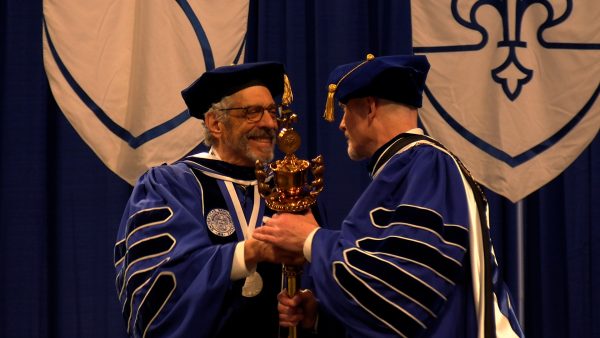
Saint Louis University formally inaugurated Edward J. Feser as its 34th president on Nov. 5,
marking a historic moment for the Jesuit institution. The ceremony, themed “Igniting Hope,
Growing in Community,” drew students, faculty, community leaders and guests from
across the globe, including Missouri Governor Mike Kehoe and keynote speaker Holden
Thorp, editor-in-chief of the journal Science.
Feser, who became president on July 1, is only the second non-ordained president to lead
SLU. He previously served as provost and executive vice president at Oregon State
University, where he led research funding initiatives and student success. He has also worked as
faculty and leadership at the University of North Carolina at Chapel Hill, the
University of Illinois at Urbana-Champaign, the University of Manchester, and as provost at
Oregon State University.
In his inaugural address, Feser centered his vision for the university’s future around SLU’s student body.
“Our top priority must always be the whole education and success of every student,” he
said.
Feser pledged to build on SLU’s recent designation as an R1 research university by
fostering interdisciplinary collaboration and integrating teaching with research. He also
urged creative use of technology to expand access and reduce costs, while deepening
partnerships with St. Louis organizations. His ultimate goal is to graduate “ethical and
inspiring doers” committed to service and the common good.
Thorp praised Feser’s leadership qualities during his keynote.
“He makes change possible when it’s needed and does so at the speed of trust,” Thorp
said, adding that universities exist first and foremost for students, a principle he believes
Feser embodies.
Feser did not shy away from considering the university’s entire history, including its ties to
slavery. He pledged to continue efforts toward truth, justice and reconciliation, framing
this work as essential to SLU’s Jesuit values.
“In examining our conscience as an institution, we name and repair what is harmful,
strengthen what is good and choose a better path,” he said.
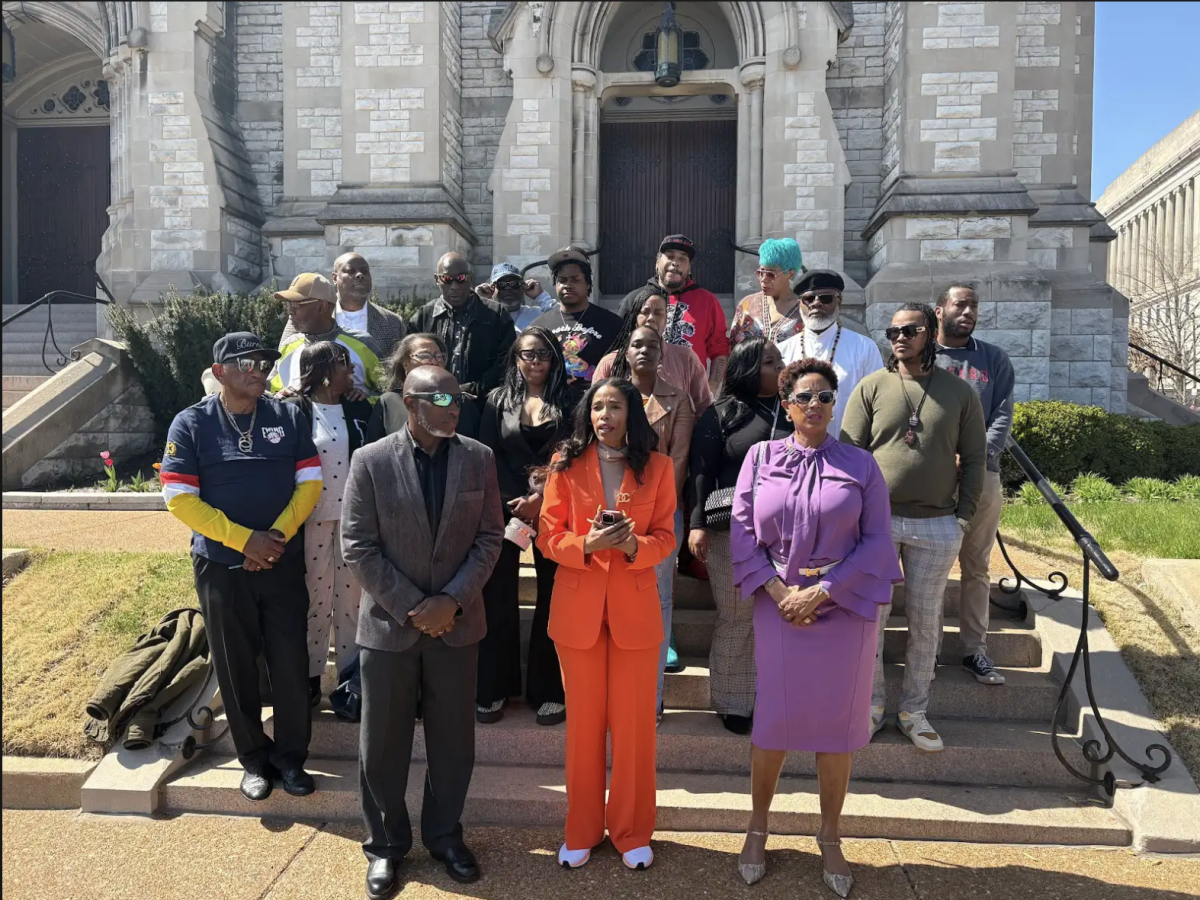
Currently, it is unknown if Feser has begun conversations with the Descendants of the St.
Louis University Enslaved, a non-profit organization formed to honor the ancestral legacies
of the enslaved people who were key players in SLU’s formation.
The ceremony featured music from the SLU pep band and drumline, and blessings from
Jesuit and archdiocesan leaders, and student speakers who echoed the theme of hope and
unity.
“I’m ignited by the people who define SLU: those who lead with compassion and a genuine
desire to make a difference,” said Meg Murphy, a senior studying public health.