

When tackling the first science fiction novel and Hollywood’s arguably most iconic and frequently adapted creature feature, Guillermo del Toro could have easily fallen into tropes and traditions. But “Frankenstein,” released to limited theaters in October and to Netflix on Nov. 7, 2025, manages to honor its source material while creating something wholly new and transcendent.
“Frankenstein” follows Victor Frankenstein (Oscar Isaac), a fiery university dropout, as he seeks to create a new life (Jacob Elordi) out of dead materials — and dodge the subsequent consequences of his success. The film shifts perspectives between the two and plays on themes of family, religion and morality.
Director Guillermo del Toro, known for “Pan’s Labyrinth” and “Pacific Rim,” approached the film not as someone with a slightly different view of a well-known story, but as someone with a fully-formed vision. Del Toro’s passion for the source material and desire to craft his own unique story shine through in equal amounts.
Notable departures from the novel are the family dynamics and emphasis on certain relationships. Instead of growing up as he does in the book with two loving parents, two brothers and two adoptive sisters, the film’s Victor faces his father’s abuse and thereby suffers a strained relationship with his brother William (Felix Kammerer).
Additionally, instead of growing up with Elizabeth Harlander (Mia Goth), Victor comes to know her as William’s fiancée. The creature bonds with Elizabeth as well, and the ironic contrasts between the two deepen the viewer’s understanding of Victor’s inability to connect with the world. Cutting characters and changing the nature of their relationships allows viewers to hone in on the why and how Victor and the creature interact the way they do. Goth also plays Victor’s mother, Claire, further illustrating Victor’s inability to untangle his various relationships and find genuine love for others.
On the other hand, one major similarity between the book and movie is the portrayal of the creature himself. Also referred to as Frankenstein or Frankenstein’s monster, the creature is usually associated with a lumbering green beast with bolts in his neck and little thought in his mind. Actor Boris Karloff brought this dominant version to the screen in the original “Frankenstein” movie in 1931. Yet in Shelley’s 1818 novel, the creature is a sensitive, eloquent man who is driven to madness only after society shuns him and Victor refuses his demands.
Elordi, while most known for roles in teen dramas like “Euphoria” and “The Kissing Booth,” performs this role with masterful sympathy and delicacy. He is utterly believable in both his wide-eyed infancy and his savage revenge. Viewers can immediately identify with his struggle to understand the strange world he was thrust into and find people to care for and love him. His innocence and danger are tragically inseparable, and Elordi depicts this agonizing internal struggle perfectly. The creature’s design is also more human in this version, looking more awkward and scarred than imposing and undead. Any preconceived notions about his status as a monster are challenged.
In fact, this question — “Who is the monster and who is the man?” — continues as a theme throughout the movie. Its ultimate message is not subtle; William simply tells the audience the film’s thesis during the climax. But it is not without poignancy. The two main characters, as greatly helped by Elordi and Isaac’s fantastic performances, exist not as protagonist and antagonist, but as two deeply flawed and intrinsically bound people judged by a world that their actions have destroyed.
These dynamics and power struggles are further evident in del Toro’s signature religious imagery. Victor’s spirituality drives him to become not a servant but a god himself. But a recurring symbol of a red angel and a parallel to the Tower of Babel issue dire warnings against hubris and allude to a murkier sense of control and higher power than Victor is willing to accept.
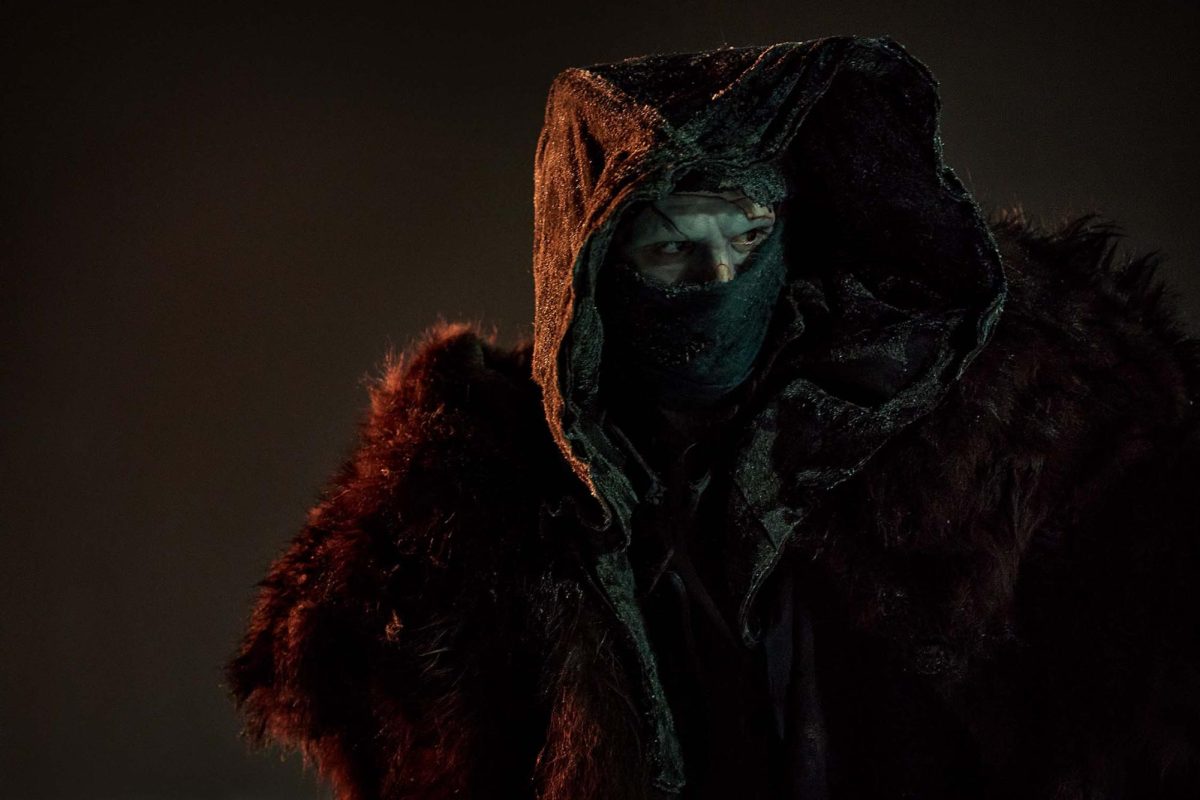
Besides its characters and themes, “Frankenstein” is absolutely stunning in its production and visuals. Practically any one frame could be analyzed and praised for its set design, lighting and costumes. The painstaking attention to detail is palpable through the vibrant and contrasting colors and symbolic through-lines. Every costume style and color contains meaning. Something as innocuous as orange gloves or a butterfly could foreshadow a character’s fate.
Even after the horrors and tragedies, the film leaves its audience with a sense of hope. Retaining Shelley’s framing device and final climactic confrontation, del Toro’s sympathetic approach to the characters and resolution of certain ambiguities change the book’s ultimate tone and message while still honoring its legacy. “Frankenstein” is both a gorgeous love letter to gothic horror and an original vision that dares to hope against all odds.