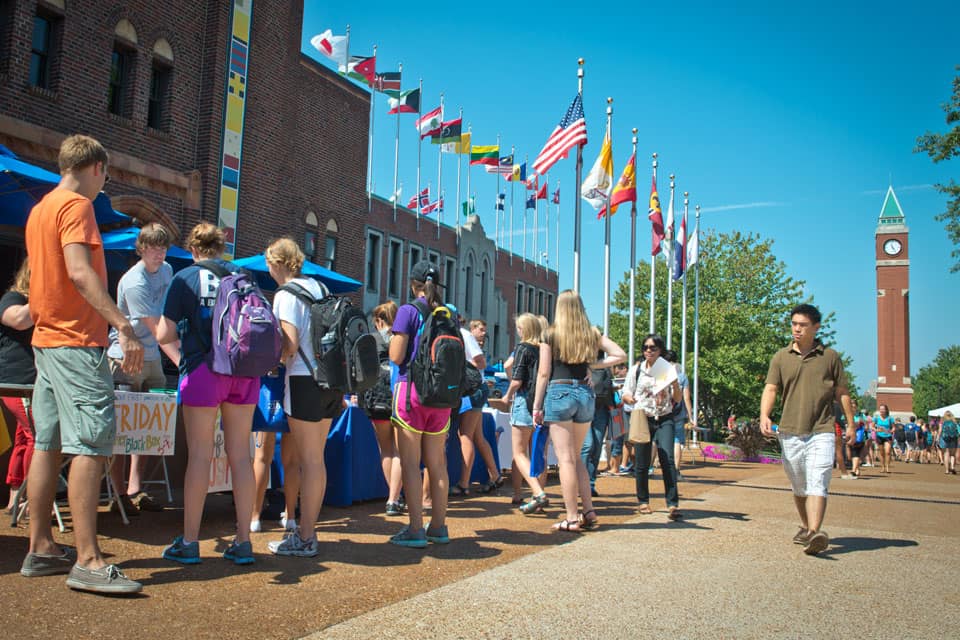


On Feb. 3, Saint Louis University students successfully prevented U.S. Customs and Border Protection from attending and recruiting at a career fair event scheduled for March 4 in the Busch Student Center.
USCBP is an agency under the Department of Homeland Security that holds the authority to detain and question anyone they believe may be an immigrant, as well as the authority to make arrests for immigration-related felonies. Under the Trump administration’s policy of mass deportation, USCBP is operating alongside ICE agents across the country, bringing what some have described as aggressive enforcement tactics and racial profiling to U.S. cities.
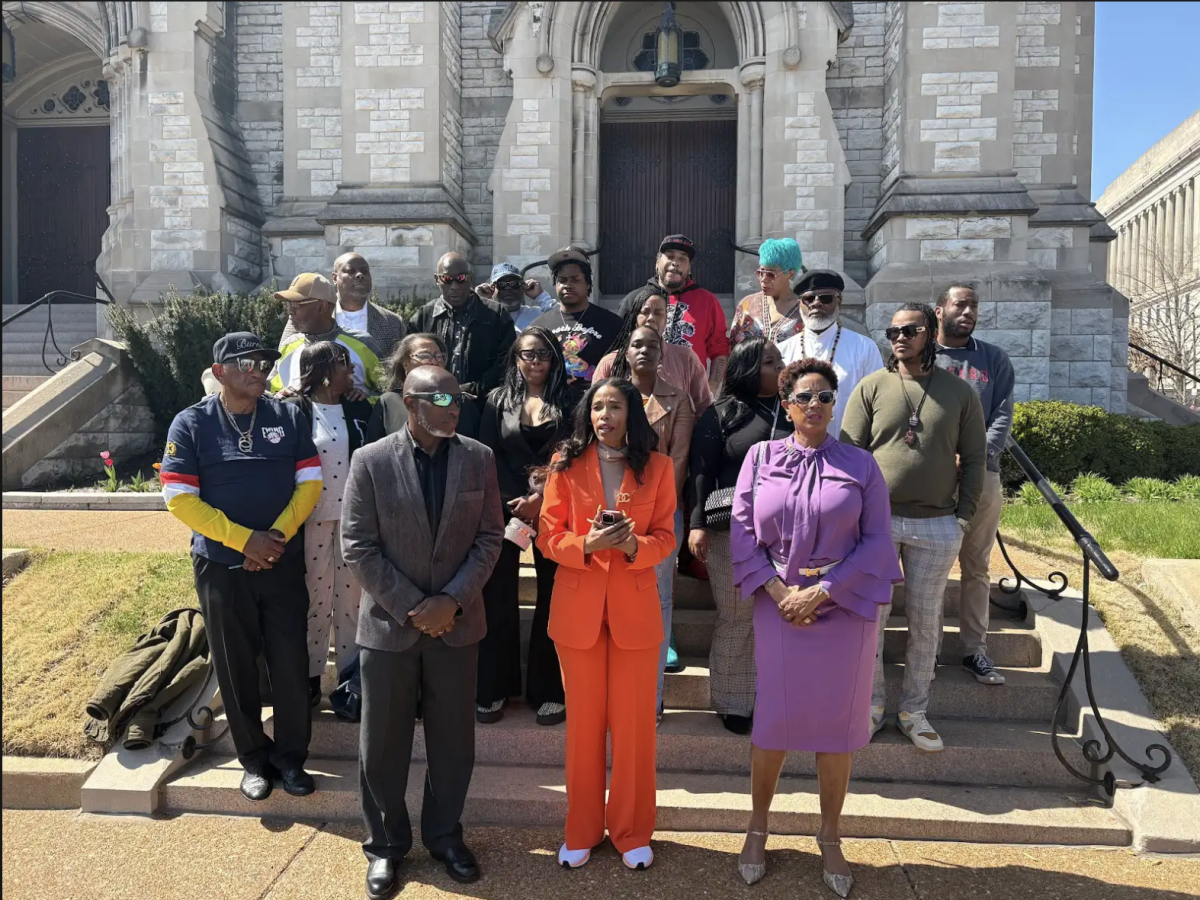
Students urged administration to disinvite CBP from the career fair with a petition that received over 1,000 signatures, dialogue with faculty and an email campaign citing concerns for student safety and misalignment with Saint Louis University’s Jesuit mission.
Several students met with the vice president of student involvement, Matt Goodwin, associate provost for Career Services, Jeff Jackson and Nicci Roach from the president’s office. The SLU administration spoke with USCBP about concerns, prompting them to withdraw from the fair. Goodwin said that for him, the conversation was about listening to students and discerning what actions to take.
“There’s no question about it that the students had a legitimate concern about student safety and more broadly about the values of the university,” Goodwin said.
Goodwin said one specific challenge was navigating SLU’s established relationship with USCPB, as they have participated in the career fair in past years as one of many government agencies that register through Handshake.
“Anytime you have to go back and have a conversation with somebody that you invited, that is a sensitive and nuanced conversation,” Goodwin said.
Goodwin also said that he expects USCBP to be back at the career fair in future years.
“I am hopeful that once we get back to a sense of ensuring safety with our college students and get past the challenging situations we’ve seen in the country with border protection, I’m confident there’s still going to be a border protection and I’m confident that that agency needs SLU students,” Goodwin said.
When students discovered that USCBP would originally be on campus for the March 4 career fair, many were fearful for the safety of themselves and their peers, particularly students from immigrant backgrounds.
Senior American Studies and Spanish major Julián García-Zárate, who is also the leader of the student coalition OccupySLU, said he is frustrated, but not surprised, that this moment is a wake-up call for many who were ignorant to the topic before.
“I think a lot of white people are having epiphanies right now because they’re realizing that white people are being killed now and that’s what terrifies them,” García-Zárate said. “CBP being on campus is terrifying. I intimately know what it’s like for family members to be kidnapped by terrorists and deported to lands that they may not even remember.”
Separate from the email campaign, two students made petitions with the help of their friends, later consolidating their work into one petition that received over 1,000 signatures. One student organizer said he created a petition to show administration the unpopularity of the decision, mentioning there were plans for a protest if CBP did come to the career fair.
“I wasn’t worried CBP would actually recruit anyone, I was more angry administration was going to let this go through,” he said.
Jackson said in a statement that “an employer’s presence at a career fair should not be seen as an institutional endorsement.”
However, as evidenced by the 1,000 signatures on the petition, much of the SLU community feels CBP’s presence at the career fair contradicts SLU’s Catholic Jesuit values of serving the vulnerable and working for justice.
The U.S. Conference of Catholic Bishops openly criticized the treatment of immigrants in the U.S. in a rare special message issued in November.
“We oppose the indiscriminate mass deportation of people and advocate for a meaningful reform of our nation’s immigration laws,” the statement says.
While Goodwin acknowledged students had a legitimate concern with the alignment with the mission, he emphasized that the major driver of the decision was to ensure student safety.

There has not been an official announcement of the change made to the SLU community. Jeff Jackson confirmed in a statement to the University News that CPB will not be at the career fair.
“I shared [the] concerns with our contact at the organization,” Jeff Jackson said in an email Feb. 3 to the 3 students who met with administrators. “[CBP] understands the situation and will not participate in the career fair.”
Jackson did not state if he would have disinvited the agency if the conversation had not been cordial.
While student advocacy succeeded in removing CBP from the career fair, some students are still concerned about how SLU would handle federal agents on campus considering that they are currently active in the St. Louis area.
Goodwin said there are robust conversations happening within administration about how to prepare for the potential unwelcomed presence of federal agencies (such as ICE) on campus.
“Some of the scenarios that we have been discussing with campus leaders are how to verify warrants signed by a judge to enter private property, where to route federal authorities should they want to access campus for any reason, and that would include the presence of our DPS officers and the Office of General Counsel—those are the university’s lawyers.”
When given this similar answer at the Belonging Panel last November several students questioned what effectiveness the lawyers would have in a scenario where ICE agents show up with guns demanding to enter a building.
Goodwin said that in this worst-case scenario, the university would be calling law enforcement.
“I would never expect a student to put their life in danger if faced with this type of threat,” Goodwin said.
While student perceptions of safety are varied, García-Zárate emphasized the power in numbers and community protection.
He urges students to be vigilant and warn each other “when we see heightened DPS presence, when we see heightened police presence, when we see unmarked police cars” and to “tell your international friends, or friends who may be undocumented to stay away.”