
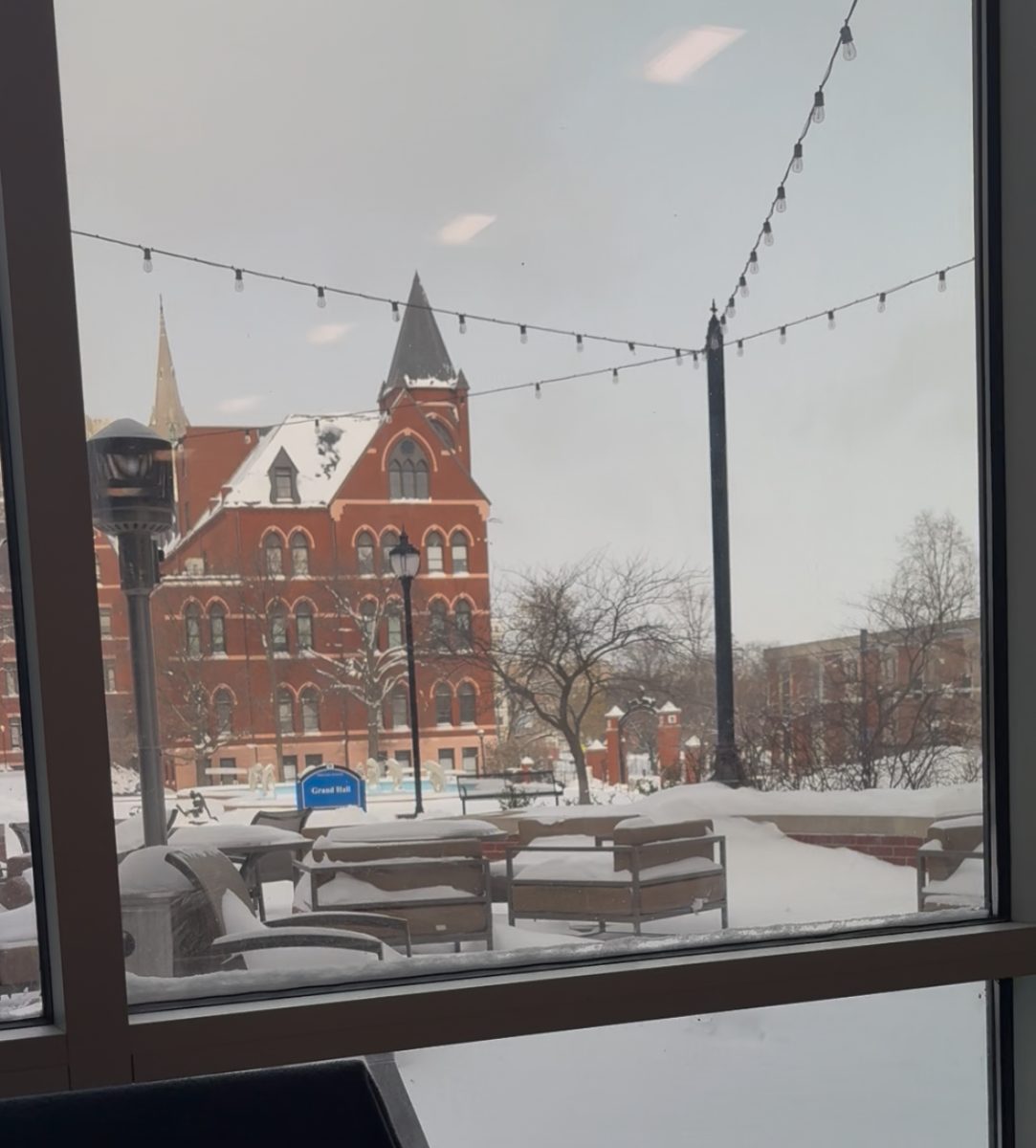
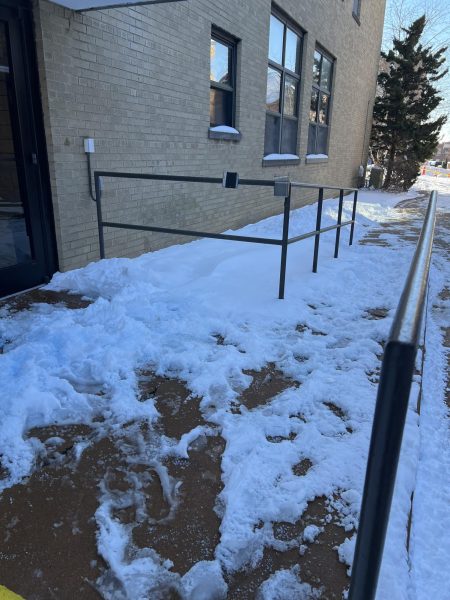
Throughout the weekend of Jan. 23 to 25, St. Louis experienced a severe snowstorm, accumulating over a foot of snow in just two days. The storm resulted in limited food options, water main and heating issues in residence halls and ADA violations to the entrances of academic buildings.
Many students who live in dorms rely on campus food options. All of these options, excluding Grand Dining Hall, which had abbreviated operating hours, closed for the weekend due to the severe storm.
Due to the increased number of students going to the dining hall, food options ran low. Several menu items were unavailable, multiple stations ran out of food and napkins and utensils were depleted.
Sophomore student Jordan Becker, who lives on campus, was not very pleased with the options available.
“It was hard to find something to eat in the dining hall, and that was our only option,” Becker said. “I was starting to get very tired of eating pizza every single day.”
Ben Perlman, SLU’s assistant vice president of student engagement, explained how DineSLU prepares for weather emergencies like this snowstorm.
“We try to load up on supplies as we anticipate both higher activity and may experience delivery delays from suppliers,” Perlman said. “We develop a weather closure operations plan that prioritizes opening locations that are able to serve the most students based on how many staff are able to travel to campus. That means prioritizing the residential locations in Grand and Reinert.”
On Sunday night, after the bulk of the storm had hit, many students were forced to walk to the closest supermarket, Fresh Thyme. The store is located approximately half a mile away from SLU’s campus.
“My friends and I went to Fresh Thyme to buy microwave dinners because the dining hall was closed and we needed to eat,” Becker said. “While there, I ran into multiple groups of SLU students doing the same thing, complaining there was nothing to eat on campus.”
SLU also faced an issue of frozen pipes bursting, causing the water to go off in Fusz and the Village apartments on Jan. 23.
“We lost water for a while on Friday night,” Becker said. “We were told that we could use the bathrooms and showers in the rec until things were fixed. The water eventually came back on around 3 a.m.”
Perlman detailed how SLU addressed the burst pipes and student safety during the water outage.
“Communication to affected students was sent out immediately, related to an outage and a timeline for repair,” Perlman said. “We provided resources for students who needed to shower, and we also provided card access to other residence halls for access to restrooms, bottle fillers and drinking fountains.”
In addition to the water issues, Marchetti Towers also experienced heating issues during the storm.
President Feser explained that the situation was stressful and the university wanted to resolve the issue as quickly as possible, and he explored the option of relocating students if needed.
“We did offer affected residents the option of temporary housing and a shuttle over to another residence hall,” Perlman said. “As far as I know, few, if any, students took us up on the option. If the repair work had not gone as quickly as it did, the residence life and housing teams would have coordinated with facilities and public safety on an evacuation of the building to temporary housing.”
President Feser expressed his gratitude for maintenance workers going out into freezing temperatures in the middle of the night to take care of both issues as quickly as they could, resulting in students not needing to be relocated.
“I’m glad we did not have to relocate students to temporary housing, but we were prepared to do so if necessary,” Perlman said.
After dealing with the snowstorm over the weekend, SLU had to decide how to handle class on the following Monday. Ultimately, the university decided to close.
President Feser explained that while the final call is left up to the provost, senior leadership personnel consulted and decided it was best to cancel.
“Our main concern is with students and faculty commuting to and from campus,” Feser said. “We want everyone to be safe, and driving on those roads would put them in a dangerous position.”
The following Tuesday, the university reopened classes as normal. Some professors chose to move to online while others still held in-person classes.
Despite the university being reopened, many buildings were still very difficult to access. Many students reported that the paths and sidewalks leading to Xavier Hall and McGannon Hall were not cleared off at all. Additionally, the only accessible entrances to Xavier were still completely blocked by snow.
Even though some students were unhappy with how things were handled, President Feser believed the process of dealing with his first big snowstorm at SLU “went relatively smoothly.” “We had some facility issues which we did not foresee, but maintenance worked extremely hard to fix those quickly,” Feser said. “We did our best to keep our students and staff safe.”