


“The Martian,” directed by Ridley Scott in 2015 and adapted from Andy Weir’s sci-fi novel of the same name, follows astronaut Mark Watney surviving while isolated on Mars using the pieces of technology and food around him, all backed by realistic science. Weir’s latest novel adaptation, however, takes the stakes and resoluteness of “The Martian” and cranks them up to 11.
“Project Hail Mary” follows the teacher-turned-astronaut, Ryland Grace, as he wakes up in a spaceship 13 light-years away from Earth, alongside two dead crew members and without any memory of his past life. As his memories slowly return, he realizes why he has been sent to space – to eliminate a strange micro-organism that is stealing energy and light from the sun.
On his journey, he meets a new friend and fellow space-traveler, a six-limbed, rocky-skinned engineer from the alien-planet Erid aptly named Rocky, who speaks in whistles and uses echolocation to see. Rocky, though a strange extraterrestrial being, grounds a lot of the story and establishes the notion of inter-species unity as a core focus of the project. The film follows their journey to the last remaining bright star in their galaxy to find out how they can save their two home planets from potential annihilation.
Ryan Gosling is absolutely phenomenal in the leading role, carrying much of the film’s exposition and plot on his performance alone. Outside of a few flashback scenes, he is the only actor with a major on-screen role. He is able to portray Grace in a very human and realistic light, as someone who struggles through initial confusion and complex emotions to achieve something greater than himself. This provides the audience with an extremely compelling and satisfying character growth, especially since Gosling has no other actors to fall back on.
When Gosling is joined by other human characters, they offer insight into just how remarkable the growth his character exhibits actually, contextualizing his initial struggles and internal conflict. Amanda Huller, who plays the intense European leader of this massive project, Ava Stratt, is a perfect foil to Grace. As they both attempt to grasp the gravity of their mission, they embody the typical ways in which humans respond to stress – fight and flight.
They both attempt to grasp the epic proportions of their mission in very different ways, each having their own arcs. Stratt exemplifies the notion of “fight,” as she throws all the world’s resources at this problem, where Grace, emblematic of “flight,” prefers to avoid the issue and sink into his sorrows until he is forced to take a step up and go to space.
The film differs from Andy Weir’s first novel adaptation by providing a story that is even more true to human nature, sometimes at the cost of accurate science. “The Martian” has a far more plausible setting with a single astronaut with years of technical training and all the perfect tools he needs to survive using real, practical science. “Project Hail Mary,” on the other hand, takes some creative liberties with science and physics but delivers on a more believable and personable protagonist. Grace is anything but prepared for this mission, constantly feeling out of his depth and terrified of the nothingness of space.
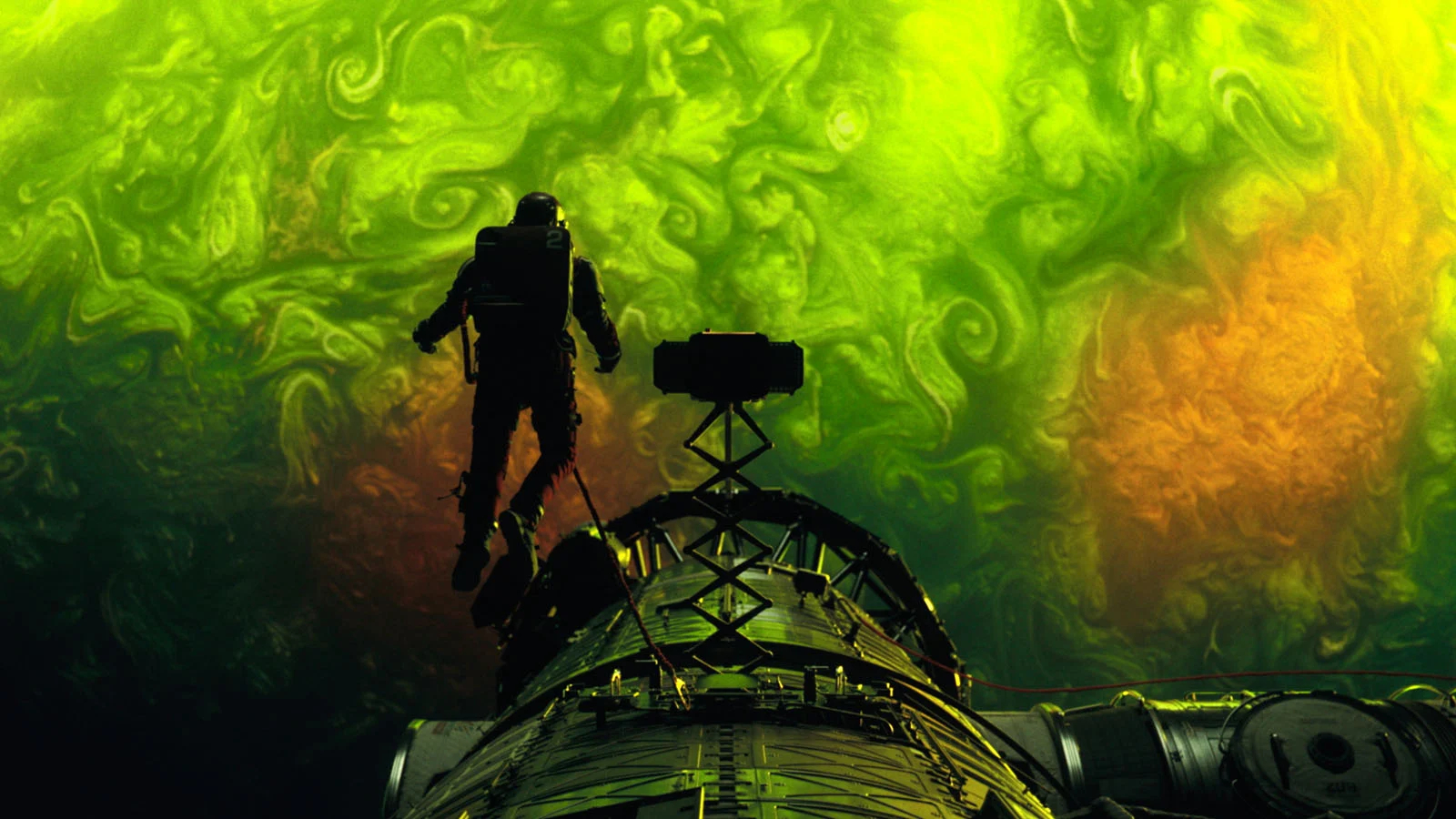
But despite this, he is able to grow and change, providing a character arc that is broadly relatable to a variety of audiences. The film’s cinematography is something short of beautiful and immersive, with the directors Phil Lord and Chris Miller employing many upside-down, rotating and shifting shots, creating an environment that perfectly captures the chaos of space.
The camera work, specifically in scenes within the tight constraints of the spaceship setting, makes the audience feel like fellow crewmates, traveling these cramped quarters alongside Grace and his alien buddy. Whenever they do leave the ship, however, the space scenes are absolutely breathtaking, with the directors employing diverse and rich color palettes to give a truly wonderful feeling of discovery to every light year these intrepid explorers travel.
The book is rather long and intense, so the film does glaze over some of the longer and more technical portions. Experiments and plans that involve a lot of hard science and internal monologues are excluded in favor of montages and short summaries from Grace to the camera. While these personal reflections from Grace don’t harm the pacing of the film, the base material that is omitted may leave some book fans slightly disappointed.
The shift to these montages doesn’t impact the overall sense of space exploration, but they do hurt Grace’s characterization as a real scientist. Many of the book’s hard science monologues show Grace’s strong analytical reasoning and how the discoveries in this story are based in real-world research and exploration.
The film’s core themes are uniquely human, tackling the ideas of self-sacrifice and hope. Grace is forced to battle with this duty to a world that never truly respected him while still trying to hold out faith that his mission can be achieved. Much of this internal conflict is well depicted in talking heads and external monologues that Grace delivers to the camera when he is alone on this journey. When Rocky joins the ship, audiences can see Grace’s growth reflected in his relationship with this strange alien-turned best friend.
At its core, “Project Hail Mary” is an underdog film about humans and aliens working together to save their home planets and delivers on that premise wonderfully. As the film is aptly titled, “Project Hail Mary” will have even the most skeptical audiences believing in miracles.


