


Students at Xavier High School in New York City, a Jesuit Catholic college-preparatory high school, were given a fun assignment: write their favorite authors, asking them to visit their school. Only 84-year-old Kurt Vonnegut, Jr., author of the 1969 novel “Slaughterhouse Five,” responded. Too old to make a personal appearance, he wrote the students a beautiful letter encouraging them to pursue creative arts as part of their education.
“Practice any art … no matter how well or badly…. to find out what’s inside you, to make your soul grow,” he said.
He ended the letter by giving the students a homework assignment: “Write a six-line poem about anything … Make it as good as you possibly can … Don’t show it or recite it to anybody … Then tear it up into teeny-weeny pieces and discard them into widely separated trash receptacles. You will find that you have already been gloriously rewarded.”
Would students in 2026 accept the challenge? Or would they simply cut and paste Vonnegut’s assignment into ChatGPT or Google Gemini?
When computerized Artificial Intelligence was the stuff of science fiction, mathematician Alan Turing developed a question-and-answer game to evaluate a machine’s ability to mimic human intelligence. Today, computerized AI is a reality, but I’m less worried about machines becoming conscious than I am about humans becoming incapable of creativity or independent thought.
A 2025 study by Microsoft concluded that repeated use of AI can lead to “cognitive atrophy,” the weakening of critical thinking, memory, and creativity. Another study at MIT demonstrated decreased brain activity among college students using AI for completing essay assignments. But it is disingenuous to blame the decline of higher education on the advent of AI. The problem started with the corporatization of higher education.
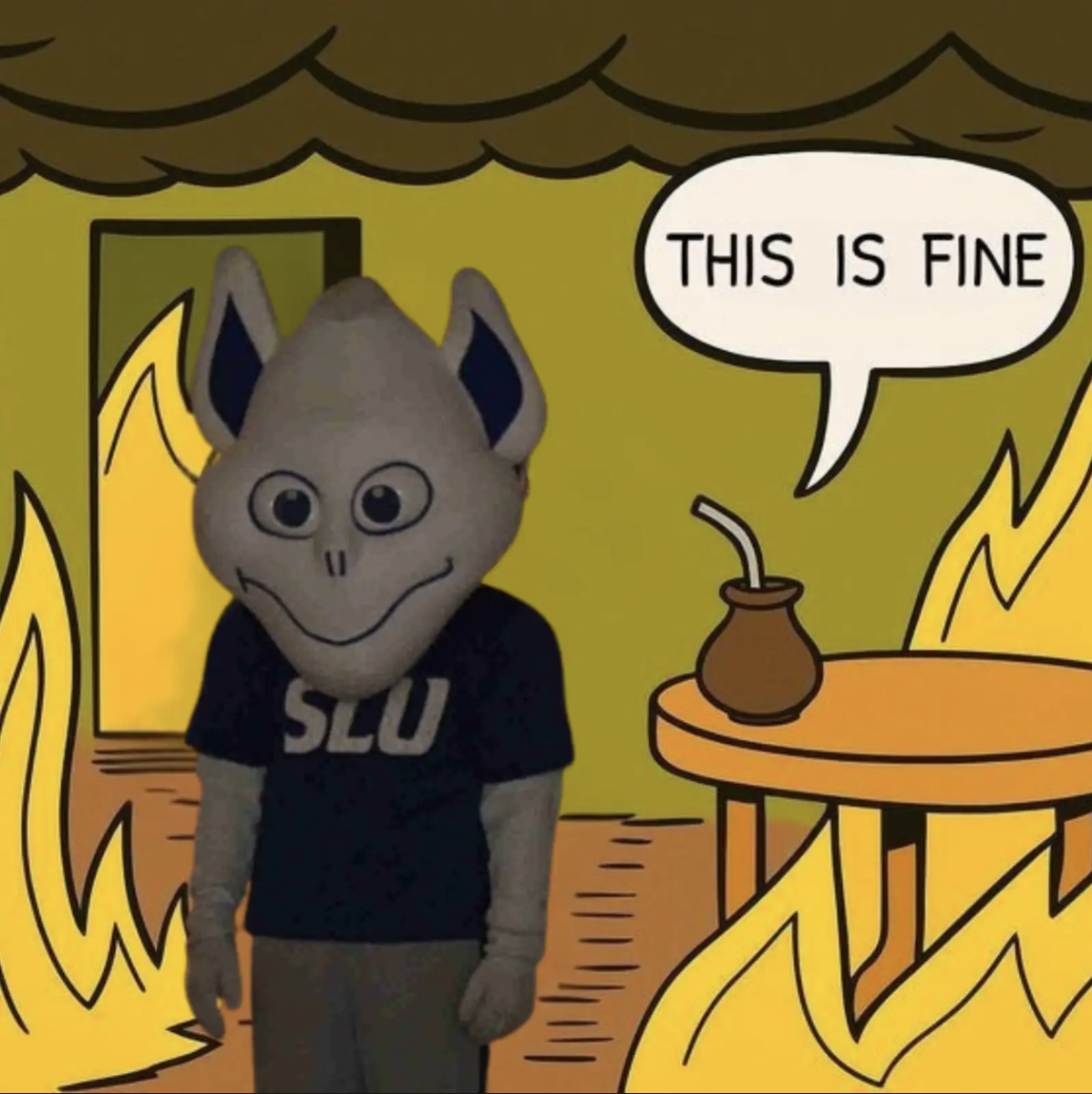
For over a decade, administrators warned about the demographic drop — a 15% decline in the number of high school graduates — and their proposed solution: eliminate under-enrolled programs regardless of their educational or missional importance. The most recent example is Syracuse University, which is closing 84 academic programs, including classical civilizations, multiple foreign languages, and Middle Eastern studies. The humanities are under attack on the mistaken assumption that these disciplines do not prepare students for today’s job market. At SLU we are hearing the same corporate rhetoric used at Syracuse — an academic portfolio review helps SLU become “more focused, more distinctive and more aligned with student demand.” A question left unanswered: What kind of human beings do we want running the world in the future? Do we want automatons who simply do as they are told? Or do we want individuals with problem-solving skills, who can identify and predict potential problems, and act independently before problems arise?
This week at SLU, teams convened by President Feser will be hosting focus groups where select faculty, participation was limited to 12 per group on a first come basis, will provide feedback on the strategic planning process. Unable to attend, I put pen to paper to record my concerns about this process. It is my hope that SLU, following the classical liberal arts model of Jesuit higher education, will protect under-enrolled programs that help our students become well-rounded, compassionate individuals.
If the cost-benefit analysis administrators typically employ extended beyond a two-year window and looked at the benefits of a traditional liberal arts curriculum over a graduate’s lifetime, they will discover that fine arts, philosophy, and foreign languages are integral parts of a tried and tested five-hundred-year Jesuit pedagogy that develops critical thinking skills, nurtures a lifetime love of learning, and creates responsible citizens dedicated to the common good. At Syracuse university, if a student wants to take a ceramics class to— in the words of Kurt Vonnegut – “make their soul grow” or simply to blow off some steam amid a demanding semester courseload, they are out of luck. Let’s pray that is never the case at Saint Louis University.





Deborah • Apr 27, 2026 at 11:57 am
A well stated reminder of the value and significance of the arts, not only to the University system but to humanity itself in these tumultuous times.