


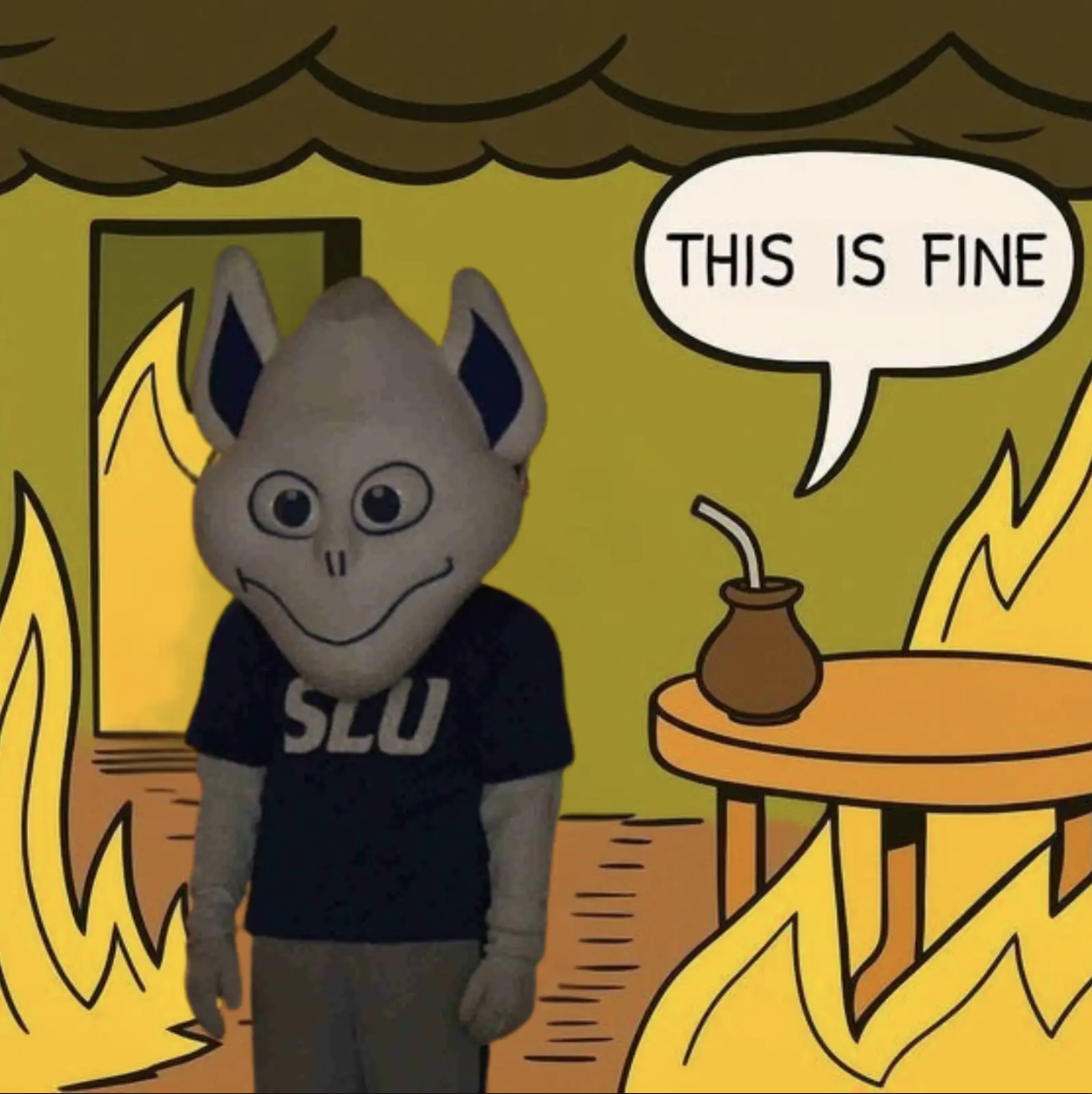
When I first arrived at Saint Louis University, I imagined I would spend my last semester of college soaking up my remaining time as a senior. Instead, I have often found myself wishing it would hurry up and end.
Graduation is suffocatingly close, and rather than feeling fully present in these final weeks, I can’t help but think about what comes after I walk across the stage: a chance to rest, to breathe, to maybe stop measuring my worth by how much I can get done in a day or how late I can stay up to do it. I understand that the idea of post-grad life is terrifying to some, but to me, it seems incredibly relieving.
I have been working hard for a very long time. Since freshman year of high school, I have balanced school, extracurriculars and a demanding job. For most of my time at SLU, I worked split shifts so I could afford an off-campus apartment. I became a fully financially independent student my sophomore year while remaining deeply involved on campus.
That hard work has paid off. I worked my way up to editor-in-chief of The University News and am graduating with departmental awards in both English and communication. I am incredibly proud of what I have accomplished despite what it took to get here, but I am also so profoundly tired in a way that even recognition for my work cannot fix.
For a long time, I thought burnout meant falling far behind, giving up altogether or visibly breaking down. But I stayed on the dean’s list, completed internships, met deadlines and showed up for others, all while failing to recognize how much I was wearing myself down. This is part of what makes burnout so hard to talk about, especially for students who’ve always been seen as high-achieving.
According to the Davidson Institute, burnout among gifted students can stem from chronic exhaustion and a mismatch between a student and the educational environment around them. For students who grow up being praised for their academic achievements, pressure can become so constant that success stops feeling rewarding and rest starts to feel undeserved.
I went to an academic magnet middle school and high school, and for years, I’ve struggled with feelings of inadequacy. Some of that pressure came from myself, but most of it came from what other people expected from me at home. In my household, anything below a B was not allowed, and academic mistakes threatened punishment. Either way, I learned from an early age to tie my self-worth to my grades, my productivity and my ability to persevere through difficult situations successfully. Over time, I came to believe that excellence was the safest option.
Lately, when something objectively good happens, like receiving a departmental award, I can’t even fully enjoy it because I had already decided I should achieve it. Instead of feeling excited or proud of my hard work, I feel relieved or numb. My accomplishments now just feel like completed expectations I placed on myself a long time ago. In this way, burnout has stolen my ability to appreciate my own life while I am living it.
I know I’m not the only graduating senior who feels this way. Many students my age are finishing college while carrying academic pressure, financial stress, uncertainty about the future and fear that all of this effort may not translate into a job offer.
We are repeatedly told to work hard, stay involved, network, build our résumés and to prepare for the real world, and many of us have done exactly that. But the “real world” we’re stepping into feels impossible to prepare for. A March 2026 Monster report found that 89% of current and up-and-coming college graduates worry AI could replace entry-level roles, while 76% worry about the economy’s impact on the job market.
Many are already adjusting their post-grad expectations: 69% say they are more willing to compromise on their ideal role and 67% would accept lower pay in exchange for long-term security. In other words, even students who’ve done everything right are entering the workforce and bracing for instability and sacrifice.
What do we do with that? For many students, myself included, the answer has been to work even harder, apply earlier and overextend ourselves in the hope that exhaustion now will somehow buy us stability later.
If I’ve learned anything, it’s that burnout should not be romanticized as proof that you cared enough or worked hard enough to achieve your goals. There is no prize for destroying yourself in private while continuing to show up for others in public. There is no award for never asking for help. There is no honor in convincing yourself that total exhaustion is just what ambitious people have to deal with.
What I am still learning, maybe too late or maybe right on time, is that not every kind of hard work is worth what it takes from you. There is a difference between building a life for yourself that is fulfilling and burning yourself out trying to feel accomplished. Be honest with yourself about what you want, what is exhausting you and what kind of life you are actually working toward. Talk to a therapist. Protect your personal time. Let yourself be a young person who is still growing, because you are.
If you are an incoming freshman, or even a student who still has time left before graduation, I hope you learn sooner than I did that your life isn’t only made up of the things you have survived or will endure. You deserve to feel proud of what you do, but you also deserve peace while doing it.





Gabriel Olmiro • Apr 29, 2026 at 2:40 pm
Great article. The reality we are stepping into is of a scorched earth that the previous generations left us with. We have little option but to reap the fruits of years of ill-spent tax money in meaningless wars that are resulting in the downfall of capitalism. Our social value is tied to numbers in a bank account, but when you’re a student the version of that is your grades. It is about performance all the time and not about welfare anymore.