
Chanté Joseph published her Vogue article titled “Is Having A Boyfriend Embarrassing Now?” on Oct. 29. The piece appeared online with the kind of velocity that makes one wonder if everyone read it at the same time, or if the TikTok algorithm thought we did.
The first time I heard of this article was through a video posted on my “For You” page on TikTok, in that half-serious, half-mocking tone common on the app. Since that first video, the article has been nearly impossible to escape. It is as if Joseph has revealed some long-considered dilemma that everyone has been dying to talk about.
Opinions on the article seem squarely divided. On one hand, there are those who wholeheartedly agree — yes, having a boyfriend is now embarrassing. On the other hand, there are counterarguments from women, mainly those in heterosexual relationships, who defend their boyfriend. They insist that it is not boyfriends in general who are embarrassing, but bad boyfriends specifically. Mainly, the type of men who walk into a room and seem to drain it of charm and intelligence.
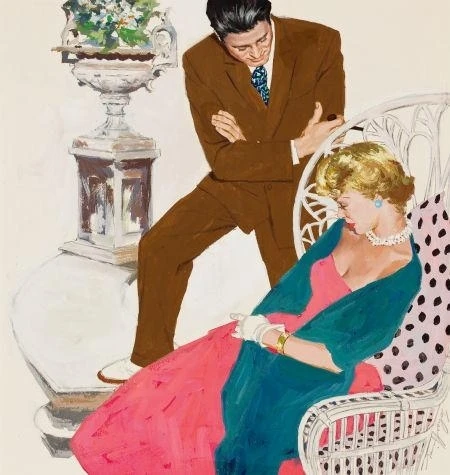
Very few creators seem to be responding to what I understood as the main point of the article. From my understanding, it seemed that Joseph was not leveling an attack on all boyfriends, everywhere, in all heterosexual relationships. Rather, she was pointing out that women no longer feel the need to post their boyfriends online. Women no longer see having a boyfriend as a badge of honor or a milestone in their achievement of womanhood.
Joseph argues, “More recently, there’s been a pronounced shift in the way people showcase their relationships online: far from fully hard-launching romantic partners, straight women are opting for subtler signs — a hand on a steering wheel, clinking glasses at dinner, the back of someone’s head.” What Joseph is referring to is the much romanticized soft launch.
It is not surprising that at the same time “I hate my boyfriend” memes are trending on social media, the soft launch of male partners has also taken the internet by storm. Instead of posting a boyfriend’s face or a picture of the couple, women often opt for a subtle sign of commitment. Rather, women opt for a post that only hints at the presence of a man, because women in today’s generation seem to share a common sentiment: that nobody really cares about seeing your boyfriend on social media.
When audios on TikTok, such as the “Why would a man be there?” sound clip, are trending, it is unsurprising that posting men is becoming less and less tempting, even for those who love their partners. This led me to pose the question: Are women embarrassed of boyfriends themselves, or do they simply want to be accepted into a culture by other single women, who are rejecting what a boyfriend has historically meant and represented?
Joseph explains this take by exploring the rise of heterofatalism. The term traces its origins to heteropessimism, a term created by author Asa Seresin in 2019 to describe the general disappointment straight people (particularly straight women) feel toward heterosexual relationships.
In looking for more context on the term, I stumbled upon the Substack article, “Heterofatalism: the politics of waiting and wanting” in which author Nicole Ocran writes that heterofatalism captures “the humiliation tied to being straight — to wanting men, to loving men, to pursuing the very thing that causes us pain and anxiety.”
Jean Garnett, in her New York Times article “The Trouble With Wanting Men” puts this exhaustion bluntly, stating, “Heterofatalism is partly just burnout.” Burnout from an age-old script that dictates who texts first, who is meant to apologize and who is forced to sacrifice their time, dreams and ambition. Spoiler alert, it is most often the woman in the relationship.
If you strip away the online opinions and hundreds of different takes, Joseph’s main point is simple: posting your boyfriend constantly is kind of cringey. Not because boyfriends themselves are inherently shameful, but because the performance found in heteronormative relationships, the urge to present oneself as perfectly paired with the perfect man, can often flatten women into versions of themselves that they are not. Namely, it can make them, as Joseph says, “beige and watered-down.”
Joseph argues that in a heterofatalist society, “being partnered doesn’t affirm your womanhood anymore; it is no longer considered an achievement, and, if anything, it’s become more of a flex to pronounce yourself single.”
This newfound pride in being single, I would argue, is a subtle form of feminism. Though not necessarily a new wave, this rejection of a centuries-old expectation that a woman’s security, identity and social position must be tied to a man is being joyously overthrown by a modern Rosie.
“Where being single was once a cautionary tale, it is now becoming a desirable and coveted status,” Joseph said.
So if being single is in, and if having a boyfriend is out, where do we draw the line? Is it only boyfriends that spark embarrassment and cringe in a feminine eye? In a society where situationships and hookups seem to thrive, is it the label of a boyfriend that is inherently embarrassing? Is it embarrassing to have a fiancés? A husband?
Around the time these questions were spinning in my mind, famed F1 driver Charles Leclerc proposed to his girlfriend, Alexandra Saint Mleux, officially solidifying their status as an “it couple”.
One creator, @laurenluvsf1, posted: “Charles Leclerc heard Vogue say it’s ‘embarrassing to have a boyfriend’ and turned himself into a fiancée.” The top comment on that post read, “and I can honestly see their wedding being in Vogue”. This irony is not lost on me. Vogue publishes an article that positions boyfriends as an embarrassment, while also positioning themselves to photograph the weddings of beautiful, wealthy heterosexual couples; effectively framing matrimony as a high aesthetic achievement.
So what is it that makes engagement socially acceptable, but not the necessary, pre-emptive boyfriend stage? Is it the implication that a man is not just a temporary romantic blunder but rather a faithful, long-term investment? Or have we simply not gotten to a point where engagements are embarrassing, too? Maybe that should be Joseph’s next article.
As a single woman myself, I was curious what my friends in relationships might feel about the piece, so I reached out to a close friend who happens to be in a healthy, long-term relationship. The friend, a sophomore named Nour Elbeshbeshy, captured the tense undercurrent of the article extremely well.
On one hand, she saw the movement as powerful, a rejection of the idea that a single woman in her thirties is somehow incomplete, a direct response to the resurgence of right-wing politics and the traditional gender norms and relationship roles they attempt to revive.
“Women are realizing their worth,” she said. “Having a boyfriend isn’t the end-all be-all, and sometimes it is kind of lame.”
But she also noted that part of the embarrassment comes from the internet’s, and more specifically, our generation’s obsession with irony. Everything is a “bit” now and everything is detached. Everything is performatively unserious. Elbeshbeshy explained that vulnerability, especially the vulnerability of saying “I care about this person,” can be seen as a huge social risk.
From what I gathered from her perspective, affection online becomes cringe not because of the person or man it is being directed towards, but because women have been taught to be suspicious of men, men in relationships and men’s promises of love, in general.
What struck me most was her final point: that the modern world already pushes us away from earnest emotional connection. Maybe the issue is not boyfriends, but the fear of being seen wanting something or more specifically, wanting someone. Wanting closeness in a culture that worships detachment can be seen as distasteful to a woman that has been hurt, lied to, or disappointed too many times.
Online, the responses from partnered women echoed similar sentiments but distilled them into the more casual, TikTok-familiar language. One TikTok creator, @viktoriavallins, posted a video that argued “having a bf is only embarrassing if he’s a loser,” Creator @aiqlics took a slightly different approach, stating “yes, having a boyfriend is embarrassing unless he worships you.”
It seemed that no one was really arguing about the same thing. Some women seemed to be talking about the aesthetics of heteronormative relationships, or having a boyfriend. Some were talking about the sociopolitical aspects of heteronormative relationships, and others about the emotional pros and cons of partnered commitment. And some seemed to be talking about men’s shockingly abysmal and uncalled for behavior that often induces secondhand shame when viewed online or heard through whispered gossip trains of telephone.
What held all these perspectives together, though, was the unspoken acknowledgment that embarrassment is not universal; it is contextual and conditional. Having a boyfriend, and that boyfriend being embarrassing, seems dependent on the man: how he treats his girlfriend, how he presents himself and how his actions reflect onto his partner in a world that scrutinizes and criticizes women for their choices relentlessly. And that’s ultimately what Joseph’s article illuminated, even if the internet flattened it into something it was not.
So yes, one is absolutely correct in arguing that having a boyfriend can be embarrassing, but the truth of the statement lies in the ever-changing, complicated conditionals of that statement.