
Transgender people have been a major political talking point for multiple years now, with discussions primarily focusing on trans people’s access to public bathrooms, sports and medical transitions. Recently, transgender people have also been one of multiple groups targeted by anti-DEI attacks on higher education.
In one prominent example, Oklahoma University student Samantha Fulnecky claimed religious persecution after writing an anti-trans essay that did not properly engage with the assignment or properly cite the biblical quotes she claimed as sources. Fulnecky has since done multiple television interviews about the experience, while the transgender graduate teaching assistant for the course was placed on leave by the university.
This experience may permanently alter both individuals’ careers. Fulnecky could join the likes of right-wing influencers like Riley Gaines, coasting along by pushing hateful rhetoric to right-wing audiences after their five minutes of fame.
Meanwhile, the graduate student is more likely to struggle to complete her degree and to find employment after graduation. She is considering taking legal action against the university, which could eventually impact other universities.
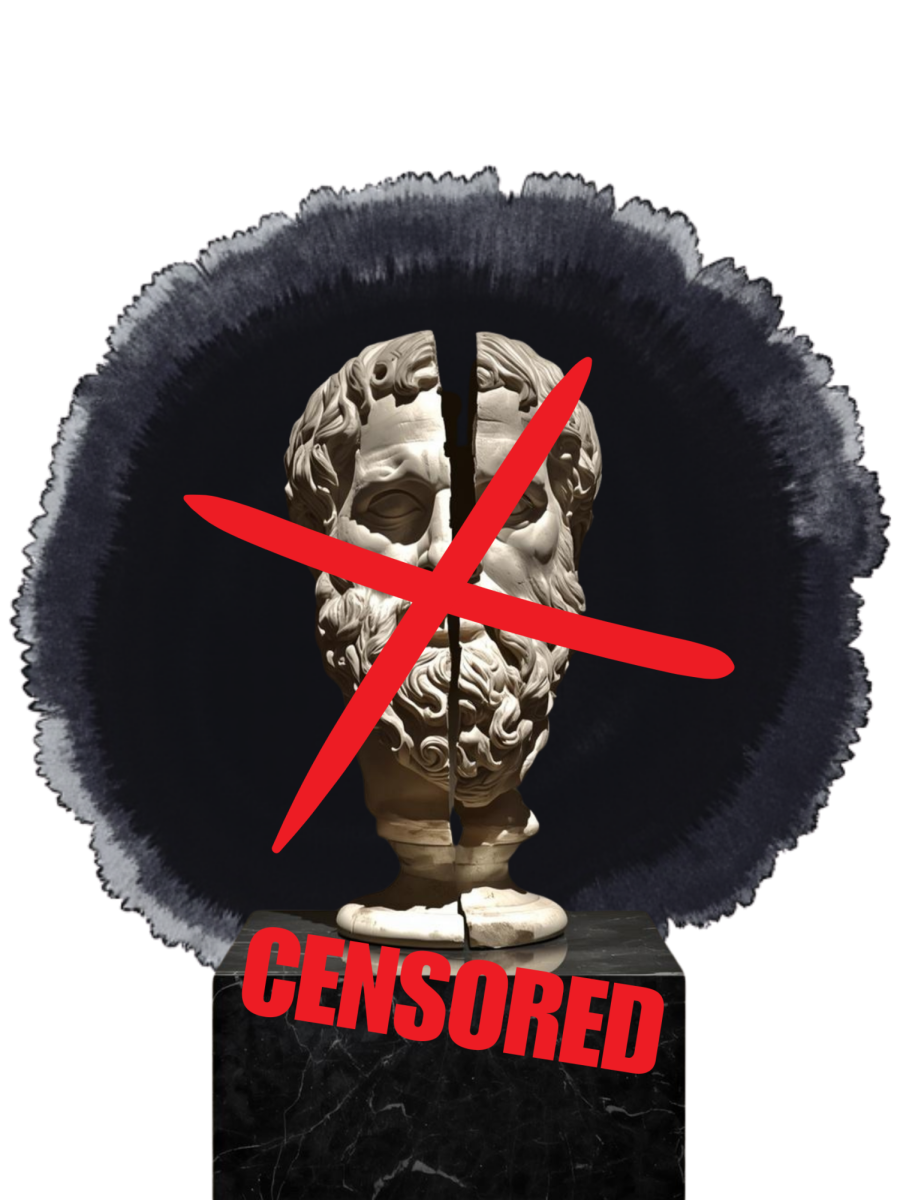
Even more recently, a philosophy professor at Texas A&M, teaching the class Contemporary Moral Issues, was warned to remove readings of Plato that dealt with race and gender, two of the biggest moral issues currently. Removing texts from one of the most well-known philosophers to exist and on topics central to the class’s topic is a clear sign of a larger problem.
But the central issue in all of these cases is not trans people. The issue is not even gender as a broader concept. The issue is censorship. And in an age where the president terminates federal research grants that will not comply with “anti-woke” expectations, these are clearly not the only examples of suppression in higher education.
Contrary to some critics’ claims, higher education does not teach a specific worldview. The “liberal” in “liberal arts” does not relate to any sort of political affiliation. Rather, the term comes from the Latin liberales artes, meaning “education worthy of a free person.” The term reflects the American university system’s love of Latin, not that the system is full of left-wing educators who all teach toward the same belief systems.
In fact, having now been a student at two very different universities and attended academic conferences, observing the ways in which individual academics working in the same fields and even the same departments disagree with each other has been one of the most interesting parts of my education. From researchers releasing articles solely meant to argue against someone else’s theory, to professors arguing about the merits of upgrading, no academic field exists as a completed artifact.
Our collective knowledge is constantly growing and changing, and higher education – particularly R1 institutions like SLU – creates that growth. This happens, in part, through dialogue and debate with students and other researchers. Putting constraints on dialogue and debate by restricting topics out of fear of negative repercussions from government organizations harms all of us.
Students miss out on important information, researchers miss out on opportunities to advance their fields and broader society members miss out on developments that come from gaining a better understanding of the world around us.
This behavior is not typical, and it should not be accepted. Dr. Karla Scott, a noteworthy communications researcher and SLU professor who studies the impact of race and gender on language, discussed in a recent class that state universities used to be seen as a safe place to get a job, as they had secure funding without the harsh oversight and censorship we currently see.
Other classmates and I have repeatedly expressed concerns over where to apply for our Ph.D.s when our work is liable to be censored by an institution that fears the current president’s wrath.
In a room full of people with diverse nationalities, races, genders, ages, languages and more, we were united in our concern for what our future holds and how we can remain safe while doing worthwhile research. Not because we have been hurt by transgender ideology, but because censorship harms all of us.