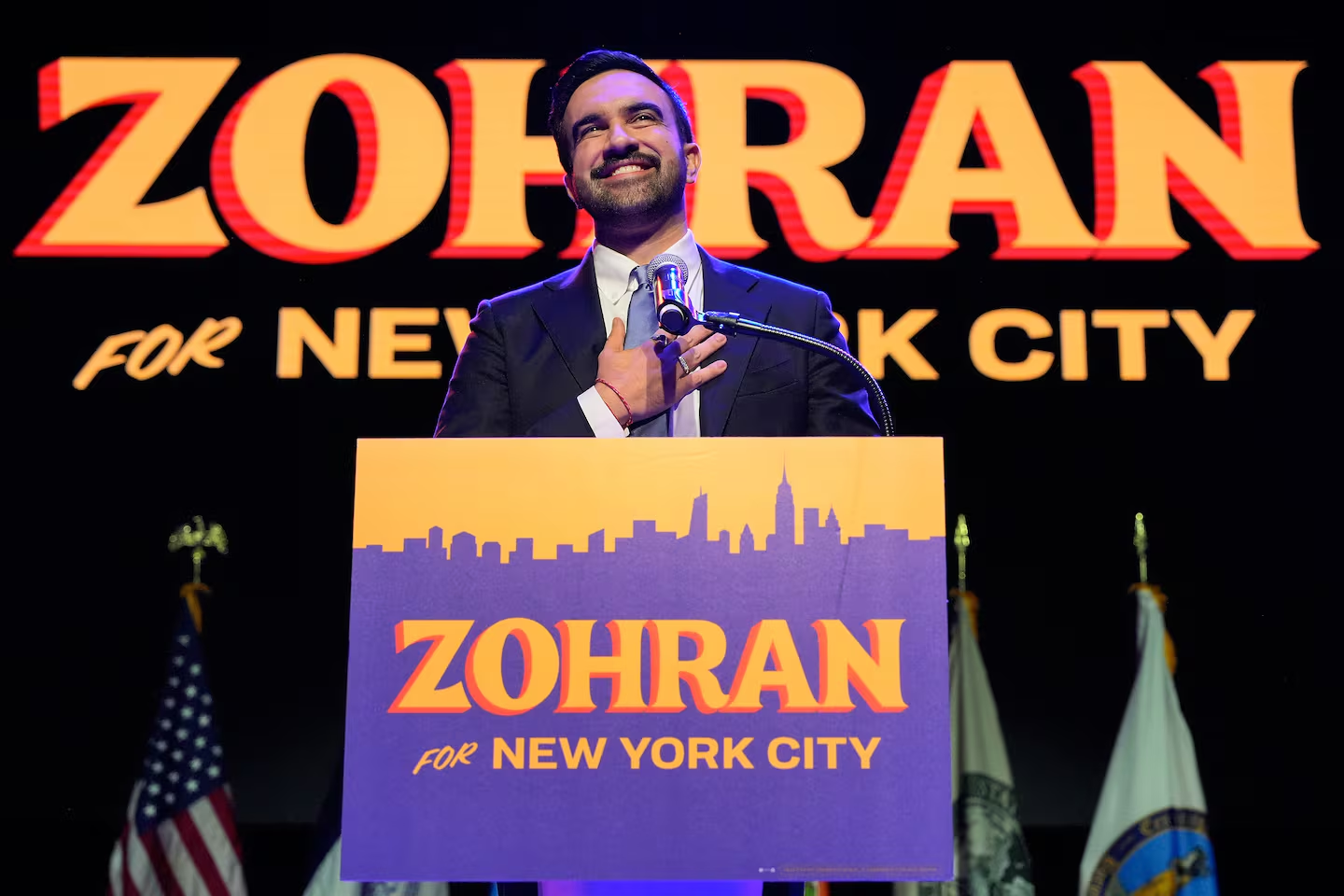

Hope in politics often sounds like an oxymoron. There is often no way to describe this constant and pervasive part of many people’s daily lives. Since the 2024 presidential election, many Americans have felt very demoralized by the government at all levels. People can not open their phones without seeing another example of an exorbitant waste of government funding: Whether it be another welfare program being cut or another clearly racist policy being heralded as “good for all.” That is, until the end of October.
The past few weeks have presented a massive shift for the Democratic Party. In the recent country-wide elections, Democrats had massive wins in key locations, making big impacts during contentious state elections.
In Virginia, Democrat Abigail Spanberger beat Republican Winston Earle-Sears to become the state’s first female governor. In the New Jersey Gubernatorial election, Democrat Mikie Sherill defeated Trump-endorsed candidate Jack Ciattarelli. California voters passed Prop 50, which will give them more Democratic seats in Congress through a new redistricting map. And in New York City, Democrat Zohran Mamdani crushed Independent Andrew Cuomo, whom he had already defeated in the city’s Democratic primary. All of these wins for Democrats across the country signified the people’s thirst for a real change in government.
The phrase “Blue Wave” references the massive gains that were made for the Democrats on Nov. 4. It describes the large influx of votes for left-leaning politicians, which is a large difference from the Trump-Harris election last year. Many of the shifting votes have been because of two main reasons: dissatisfaction amongst Trump voters following his inauguration and overall disappointment with the Democratic Party.
Election exit polls have shown that Republican officials have fumbled the first year of the Trump administration in a big way. While many voters were aware of the sweeping changes Donald Trump would present once elected, even more have been on the receiving end of these changes, which have only increased the strength of his critics. So many have lost important benefits, and the entire country is reeling from his insane tariff plan. Having promised cheaper groceries months ago, many are dealing with large cost increases instead.
Discussions online show that recent elections have felt very different from many in the past. For years, voters have been focused on choosing “the lesser of two evils,” as both candidates have felt like they would spell doom in different ways. The latest races have felt very different, with candidates appealing to people on both sides of the aisle. Many voters are focused on real issues that affect everyone, and simply want politicians who can deliver results.
These feelings took effect in the voting booth, as shown through the large lead shifts scored by Democrats. In Jersey, where Kamala beat Trump by 5 percentage points, Sherill beat Ciatrelli by almost 14 points. There was a similar reaction in Virginia, where Spanberger beat Earle-Sears by 15 points compared to Kamala’s 5% lead in the state the previous year. These dramatic movements are indicative of the necessary changes people want to see in government. But an even more apparent shift was what happened in New York City.
Zohran Mamdani is an outspoken Democratic Socialist. He wants to make transportation and pre-K free for millions of New Yorkers in one of the busiest cities in the world. He wants to offer transparency to voters and not use any PAC or billionaire funding. The current political state feels like centrists vs conservatives, with no real space for real liberal ideas. This is a campaign that just should not work in American politics, but miraculously, it did. Mamdani’s campaign began a year ago and captured the attention of the entire world. This is because his candidacy and win mean so much more than a stronger NYC. They mean that new voices can and will be heard.
While the recent events have been very fortunate for the Democrats, Americans still have a ways to go before attempting to fix the many issues introduced by the Trump administration. These recent elections can introduce massive growth, but the country as a whole is still facing massive issues, including the longest government shutdown on record. This was just ended at the cost of massive Affordable Care Act cuts and an overall loss for the Democratic Party.
Grocery prices are still on the rise. Our president is still running around causing chaos on the world stage. And the Epstein files still have not been released. It is important to celebrate the wins, but it is equally important to remember the work that still needs to be done.
Our Republican president is 79 years old, but the average House Democrat is 58 years old and the average Senate Democrat is 65 years old. These are career politicians who have spent decades in government, unfortunately taking spots away from the newer generations.
Following the November special elections, California Representative Nancy Pelosi announced she would not seek re-election following 39 years in government. Saikat Chakrabati, a potential frontrunner for Pelosi’s seat, shared in a campaign video, “Thank you, Speaker Emerita Pelosi … for doing something truly rare in Washington: making room for the next one.” Chakrabarti here echoes a common sentiment amongst younger Democrats: the party has gotten too old and needs to step aside for new voices and ideas.
The former Speaker of the House must have seen the writing on the wall, unlike many of her fellow congressmen and representatives. She has moved aside to make space for younger, more passionate politicians. There are currently 66 millennials and only one Gen-Z member in Congress. More and more Gen-Z are getting to voting age, and they want their ideas reflected in their elected officials.
For things to change, the burden is on us. Gen-Z desperately needs to be in the voting booth, and not just for the presidential elections. Every state, every city and every county has issues that impact them specifically, and these issues can not be addressed if their own citizens do not make an effort to bring about change. Nov. 4 was only the beginning, and it is up to us to keep this wave flowing.